Learn More about NeuroMind
Emily Dixon
LMSW, LISW, BCIA Candidate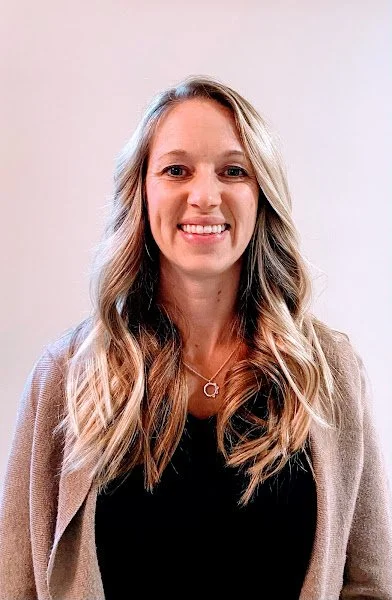
FounderEmily grew up in West Michigan and relocated to Greenville, South Carolina, in 2023. She is the proud mother of three children (two daughters and a son) and has always valued the flexibility to prioritize family alongside her professional career. Emily homeschooled her two youngest children for most of their K–12 education, an experience that deepened her appreciation for lifelong learning and individual growth.
Professionally, Emily serves as a Professor of Social Work at Spring Arbor University, where she has spent many years teaching, mentoring, and supporting future helping professionals.
Faith and community are important parts of Emily's life. She and her family are actively involved in their local church, where they value meaningful relationships, service, and spiritual growth.
Outside of work, Emily enjoys spending time outdoors, whether on the water, in the mountains, or exploring new destinations. She and her husband, of more than 20 years, enjoy cycling, hiking, traveling, and experiencing new cultures together. Their adventures have taken them throughout Central America and to destinations such as Portugal and Thailand, fostering a deep appreciation for the diversity of people, perspectives, and experiences around the world.
Emily Dixon is the founder of NeuroMind and a Licensed Master Social Worker with over 20 years of experience in family preservation, education, and professional training.
Emily's passion for neurofeedback grew from a desire to better understand the connection between brain function, behavior, emotional well-being, and performance. She believes in the science of neuroplasticity—the brain's ability to learn, adapt, and change throughout life—and is committed to helping individuals unlock their potential through evidence-informed, non-invasive approaches.
Emily is dedicated to helping clients improve focus, self-regulation, resilience, emotional balance, and overall performance.
Frequently Asked Questions
-
We offer swLoreta Neurofeedback:
swLORETA (Standardized Weighted Low Resolution Electromagnetic Tomography) is an advanced form of neurofeedback that helps identify and train patterns of activity within the brain's deeper networks. Unlike traditional neurofeedback, which focuses primarily on activity recorded at the scalp, swLORETA uses sophisticated mathematical modeling to estimate activity within regions of the brain involved in attention, emotional regulation, executive functioning, and self-control.
Using information gathered through EEG sensors, swLORETA provides real-time feedback that helps the brain learn more efficient patterns of functioning. This process is non-invasive, painless, and designed to support the brain's natural capacity for change, known as neuroplasticity.
At NeuroMind, swLORETA neurofeedback allows us to better understand how brain networks are functioning and provide personalized training that supports focus, resilience, emotional well-being, and overall performance.
-
The first step is to schedule and complete a qEEG.
A qEEG, or Quantitative Electroencephalogram, is a way of measuring and mapping brain activity. During the assessment, sensors are placed on the scalp to record the brain's electrical activity while you rest quietly. The process is completely non-invasive and painless.
Think of a qEEG as a "brain map." Just as a doctor might use blood work to gather information about how the body is functioning, a qEEG provides information about how the brain is functioning. The results are compared to a large database of people your age to identify areas that may be overactive, underactive, or not communicating as efficiently as expected.
The qEEG does not diagnose medical or mental health conditions. Instead, it provides valuable information that can help guide neurofeedback training and create a more personalized approach to improving focus, emotional regulation, sleep, resilience, and overall performance.
Your qEEG appointment cost includes data collection, a detailed report of findings, analysis, and a roadmap for your clinician to develop treatment protocols, should you choose to move forward with neurofeedback.
-
You can reach us anytime via our contact page or email. We aim to respond quickly—usually within one business day.
-
The charge for the initial qEEG is $500. Individual Neurofeedback sessions are $150/75 min session. 10 sessions is the recommended amount for swLoreta Neurofeedback.
-
At NeuroMind, we have chosen to operate as a private pay practice to provide the highest level of personalized care and flexibility for our clients.
Insurance companies often require a mental health diagnosis and may place limitations on the types, frequency, or duration of services that are covered. By remaining independent of insurance networks, we are able to focus on your individual goals and needs rather than the requirements of a third-party payer.
Private pay also allows for greater privacy, as information about your care does not need to be submitted to an insurance company for reimbursement or authorization purposes.
Our approach emphasizes comprehensive assessment, education, neurofeedback training, and individualized recommendations designed to support optimal brain function, performance, and well-being. This flexibility allows us to tailor services to each client without being restricted by insurance guidelines.